A selection of projects developed, led or participated in by Jean-François.
Governing the Metaverse and tomorrow’s internet
(2022 – 2023) – Renaissance Numérique
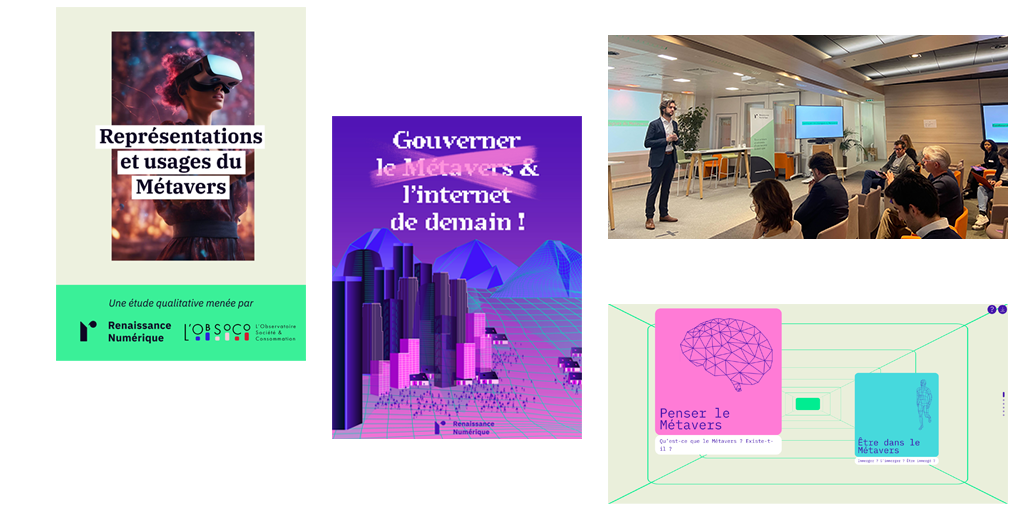
Between 2022 and 2023, the think tank Renaissance Numérique explored ways of thinking about the uses, economic models related to the place of the body, and methods of regulating and governing the metaverse.
Several outputs and events are tied to this work over a year:
– A cycle of three international meetings: the Metaverses Dialogues
– A qualitative study: Representations and Uses of the Metaverse
– A final report: Governing the Metaverse and tomorrow’s internet
– A website : www.metaversedialogues.org
CAPACItés
(2021 – 2022) – Chronos / Cerema
Cerema and Chronos designed an action-research program to develop the « CAPACIties » of businesses and local authorities to cooperate in order to produce smart, ecological, and low-impact territories. Similar to DataCités 2, this is a partnership program funded by ADEME, Citeos, Esri, InfraNum, Groupe Lacroix, NGE Connect, Omexom, Sogetrel, and with participation from the territories: Caux Seine agglo, Dunkerque Grand Littoral, Lisieux Normandie, Métropole Toulon Provence Méditerranée, et Vallée de Chamonix Mont-Blanc.
>> more informations
From Projected Quality to Lived Quality. Rethinking the Quality of Inhabited Spaces in a Context of Ecological Transition.
(2020 – 2022) – Chronos / EPFL

For Chronos, in partnership with the Laboratory of Urban Sociology (LASUR) of the École Polytechnique Fédérale de Lausanne (EPFL), and on behalf of the Republic and Canton of Geneva, Jean-François coordinated a study entitled: From Projected Quality to Lived Quality: Rethinking the Quality of Inhabited Spaces in a Context of Ecological Transition.
Whether urban, architectural, environmental, social, technical, scenic, or a composition of these dimensions, “quality” is an objective—or even an injunction—that every urban project must address. As “the act of building” has become a “truly social activity, as the scope of practices, the spectrum of stakeholders, the range of available tools and communication methods, and the legislative and political framework expand” (Chombart de Lowe, Pribetich, 2012), quality is not only a matter of “composition between the dimensions that make the city” (Bailly et al., 2015b); it is a question of composing all the “arguments” (objectives, expectations, attachments, desires, etc.) from various stakeholders (elected officials, designers, residents, etc.), in the face of constraints imposed by legislative and political frameworks and the necessity of ecological transition.
DataCités 2
(2018 – 2020) – Chronos
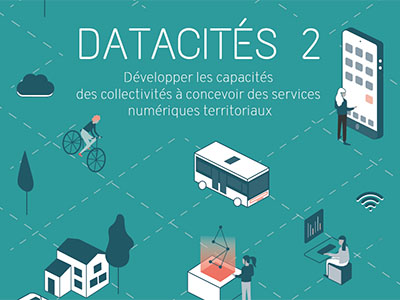
DataCités 2 is an exploration bringing together public authorities, private actors, and institutions to strengthen the abilities of local governments in the development and governance of digital territorial services, transforming them into tools of the public interest that promote the energy and ecological transition and the revitalization and accessibility of small and medium-sized city centers.
For a year, Chronos and DataCités 2 partners assisted the City of Antony, the Pompey Basin community of communes, Grand Poitiers Urban Community, La Rochelle Urban Community, and the Republic and Canton of Geneva, testing and analyzing ways to enhance the agency of municipalities regarding integration, use, and sharing of digital data.
Rennes Métropole Metropolitan Public Data Service
(2017 – 2019) – Chronos
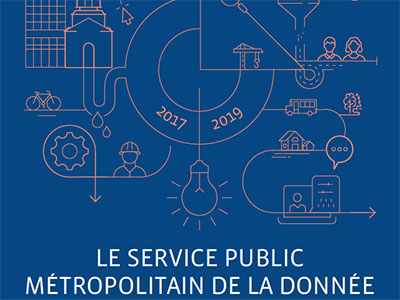
On behalf of Chronos, Jean-François for two years supported the partners of the Metropolitan Public Data Service (SPMD) project, notably Rennes Métropole, in steering and evaluating the project.
This is fundamentally a governance project, whose aim was to outline conditions for sharing territorial data and to test hypotheses on datasets related to key public policies of the local authority.
The summary of these two initial years is available online: https://fr.calameo.com/books/0054162347aa5186b1308
Mobility: topic detection in social networks
(2016) – Social Media Lab / EPFL
Social networks such as Facebook and Twitter are privileged platforms for teenagers’ expression and information sharing. This study, based on a Big Data approach, aims to explore how persons under 18 years old “talk” about their mobility behaviors and aspirations on these social networks.
This exploratory research analyzes millions of public posts (“tweets”) from Twitter in order to identify relevant topics related to the topic “mobility under 18”. This exploratory work generated insights for the design of a web quantitative survey done by the EPFL Laboratory of Urban Sociology (LaSUR).
The EPFL Social Media Lab is developing an experimental platform, named Horizon, designed for tracking digital conversations on the Web and social networks about controversial issues. It analyzes the public expressions (posts, comments, articles, etc.) about specific issues by using data mining techniques. In this study, we have collected nearly 3 million tweets in one month. Then, we analyzed the textual content (140 characters) of each tweet by using a statistical analysis labelled “Term Frequency-Inverse Document Frequency” (TF-IDF)”, in order to detect the most frequently used words or expressions by teenagers within the corpus. Finally, we classified each word into to five categories related to the mobility experience: “Car”, “Two-wheeled vehicles”, “Driving license”, “Public Transport” and “Shared mobility”.
Building on this data extraction, we proposed an exploratory analysis based on scientific theories, on creativity and prospective methods in order to produce insights and innovative ideas for the researchers of the LaSUR. This collective work does not claim to meet the requirement of scientific methodology, since the aim is to enhance ideas generation to carry out a web survey or to imagine new topics for a qualitative questionnaire.
Chaire Modélisation des Imaginaires, Innovation et Création
(2013 – 2016) – Chaire MODIM
It is at the crossroads of knowledge and imagination that innovations emerge—where the images, stories, narratives, intuitions, and emotions of designers and users intersect.
To explore and model these paths of innovation requires gathering and integrating transdisciplinary competencies, as well as using concepts and methods from industry and science. The “Modeling Imaginaries, Innovation and Creation” research and teaching chair (MODIM) established a long-term partnership (2010–2015) bringing together academics (Télécom Paris-Tech, Univ. Rennes 2, Strate School of Design) and industry partners (Dassault Systèmes, Orange, PSA Peugeot Citroën, Ubisoft).
For 5 years, the MODIM Chair met the challenge of treating “imagination as a raw material”, deciphering archetypes or even the “grammar” of the imaginaries involved in innovation processes. It sought to model and formalize imaginaries defined as dynamic combinations of stories (conversations and fiction) and universes (shapes and virtual, immersive, and interactive worlds).
For 3 years, Jean-François was innovation and creativity manager within this Chair.
>> See all the books
Magic Ring
(2011 – 2012) Doctoral thesis – Université Rennes 2 & University of California San Diego (UCSD)
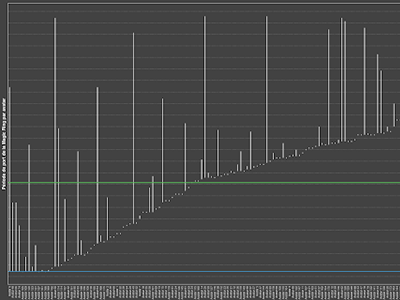
During his doctoral thesis on immersion processes and inhabiting virtual worlds, Jean-François developed a tracking tool in Second Life, the Magic Ring, able to collect millions of highly precise data points from a large sample of subjects.
This project was developed during a research stay at the University of California, San Diego (UCSD). Conferences and scientific publications were produced on this topic. A blog, “Scientific investigation in Second Life and Open Sim,” was maintained throughout the Magic Ring’s development, use, and analysis.
>> See the doctoral thesis (en PDF) : De l’immersion à l’immersion dans les mondes virtuels
From immersion to inhabiting in virtual worlds
(2008 – 2013) – Doctoral Thesis – Université Rennes 2
Jean-François completed a thesis in sociology titled “From immersion to inhabiting in virtual worlds: the case of cities in Second Life” (in french).
This research addresses the immersive phenomenon in virtual worlds accessible via the internet, especially Second Life. Through a formal approach (Simmel) and Actor-Network Theory (Latour), Jean-François analyzed various mediations shaping the perceptual, narrative, and social regimes. This thesis straddles many disciplines: sociology, information and communication sciences, philosophy, geography, digital humanities. It uses diverse methods: participant observation, interviews, surveys, inworld tracking.
This research shows that immersion depends on user choices (visual viewpoint, activity choices, etc.) and on the qualities and possibilities of the virtual world (technical architecture, world map, built environment, etc.). Processes of appropriation and attachment between actors and places are analyzed and described through the formalization of a “home”. The research contributes to a theory of inhabiting in virtual worlds.
Metalab 3D for CyberTerritories
(2007 – 2011)
For several years, Gehan Kamachi and his colleagues Hugobiwan Zolnir and Loïc Haÿ maintained the Metalab 3D blog for CyberTerritories.
Metalab 3D for CyberTerritories was a monitoring and experimentation space that sought to understand and make visible the potential uses of virtual worlds by public stakeholders in real territories. It acted as a lab and resource center for projects aiming to hybridize physical and imagined public spaces.
It was a space for exploration and experimentation to imagine and realize uses of physical territories in persistent virtual universes. Faced with the increase of private uses, the issue was to position public territories strongly and clearly in a joint approach of foresight and action.
Transmusicales in Mixed Reality
(2007 – 2008) – Rennes Metropole
On two occasions, Gehan and Jean-François joined a special team led by Hugobiwan Zolnir to deliver two “mixed reality” concerts (2007 & 2008) at the Trans Festival in Rennes.
The goal was to share a live concert experience between the physical venue and cyberspace. These projects were developed with the city of Rennes and the “Les Trans” festival.
A joyous, pioneering experience that foreshadowed many so-called “virtual” concerts now emerging.
TooLeNet
(2006 – 2007) – 1001 Marketing
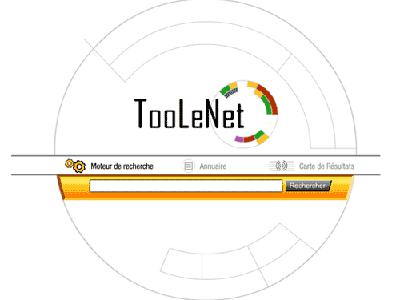
While with 1001 Marketing, Jean-François contributed to the design of Toolenet, in partnership with KartOO (a search engine with a graphical interface).
A French search engine, Toolenet aimed to be an alternative to Google. Thanks to Yahoo! Search Technology, it offered three search modes (keywords, search engine, directory). Francophone sites were presented by editors with a map of results highlighting keywords.
Business PME
(2005 – 2007) – 1001 Marketing

Within 1001 Marketing, Jean-François helped develop Business PME.com. This site offered a directory of microbusinesses, self-employed, EURLs or SARLs, as well as most companies with fewer than 500 employees.